
Is JetBlue Going Out Of Business | Complete Truth in 2026
JetBlue has been a familiar name at airports up and down the East Coast for more than two decades, so when headlines about billions in debt and a credit downgrade start piling up, it is natural to wonder: is JetBlue going out of business?
Is JetBlue going out of business in 2026? No, JetBlue is not filing for bankruptcy or shutting down. The airline is under real financial strain, but it is still flying, still selling tickets, and still operating flights to over 100 destinations.
Here is the complete, updated answer for 2026, along with everything that is actually driving the headlines.
Given six straight years of losses, a heavy debt load, and a credit rating deep in junk territory, the concern is understandable.
What is happening is a genuine financial squeeze, made worse by a sudden 2026 jet fuel spike, not a company that is closing its doors.
Today, we will go through everything about JetBlue’s finances, so let’s dive in.
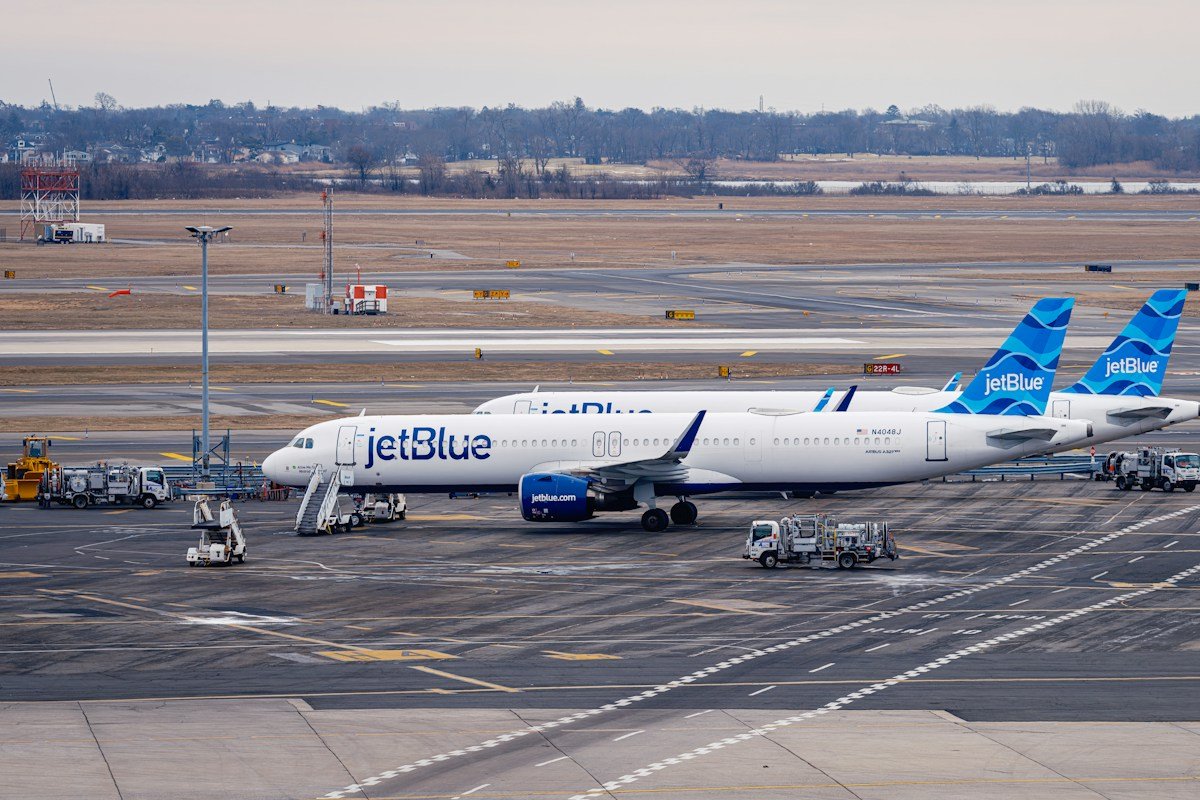
Is JetBlue Going Out of Business in 2026? The Quick Answer
JetBlue is not in bankruptcy, not liquidating, and not ceasing operations as of late 2026. CEO Joanna Geraghty told employees directly in an internal memo that a bankruptcy filing is off the table for the year, citing sufficient liquidity and access to additional capital.
That said, the financial picture is genuinely rough. JetBlue is carrying roughly nine billion dollars in total debt, has not posted a full year net profit since 2019, and saw its credit rating downgraded to CCC+ in June 2026, a level deep in speculative territory.
The airline held about 2.2 to 2.5 billion dollars in available liquidity through the first half of the year, along with access to additional financing, which is the main reason management keeps ruling out a near term bankruptcy filing.
In other words, the losses and the debt are real, but a full shutdown is not what is currently happening or what JetBlue’s own leadership is planning for.
How JetBlue Got Here: Six Years of Losses
To understand why this question keeps resurfacing, it helps to look at what actually happened to JetBlue’s business since the pandemic.
JetBlue is not the only carrier facing this kind of scrutiny. Frontier has drawn similar headlines, and travelers curious about that airline can read our full breakdown of whether Frontier Airlines is still in business for comparison.
The Pandemic Losses and the Failed Mergers
JetBlue last posted a full year profit in 2019. Every year since has ended in the red, and by the end of 2025 the airline had racked up six consecutive years of net losses.
Two strategic escape routes closed on JetBlue in recent years. Its proposed merger with Spirit Airlines was blocked on antitrust grounds, and its Northeast Alliance partnership with American Airlines, which let the two carriers coordinate schedules and share revenue in New York and Boston, was unwound after a separate antitrust ruling.
Both deals were meant to give JetBlue more scale and pricing power. Losing both left the airline to fight for profitability largely on its own, right as costs across the industry kept climbing.
The 2026 Fuel Price Shock
JetBlue entered 2026 with a turnaround plan already in motion, called JetForward, announced back in July 2024. The plan focuses on cutting unprofitable routes, concentrating capacity in strong East Coast markets, and expanding premium seating.
Then came a sharp jet fuel spike tied to the 2026 Iran war, which JetBlue said forced it to withdraw its detailed profit guidance in April before reissuing updated guidance in late July once the picture stabilized.
JetBlue founder David Neeleman publicly warned that the airline was at real risk of bankruptcy if fuel prices stayed elevated, citing an analyst model showing a possible 1.3 billion dollar annual loss at 4.50 dollars a gallon. JetBlue’s own management pushed back on that framing directly, and a Bloomberg-reported internal memo confirmed the airline was ruling out a 2026 filing.
What JetBlue’s 2026 Numbers Actually Show
JetBlue’s second quarter 2026 results, reported in late July, showed a net loss of 247 million dollars on operating revenue of 2.697 billion dollars, which was actually up 14.5 percent year over year.
Unit revenue rose 10.9 percent in the quarter, a sign that JetBlue is successfully charging more per seat, but average fuel costs of 4.23 dollars per gallon, up 76 percent from a year earlier, ate deeply into that progress. JetBlue said it recaptured roughly half of the added fuel cost through fare increases and cost cuts.
Across the first half of 2026, the net loss totaled 566 million dollars, an improvement in trajectory compared to the 795 million dollar full year loss JetBlue posted in 2024, even though the company is still firmly unprofitable.
The JetForward turnaround plan has generated 470 million dollars in cumulative earnings improvement through June 2026 and remains on track for an annual benefit of 850 to 950 million dollars by the end of 2027, according to the airline.
JetBlue’s debt maturities are manageable in the near term, at roughly 755 million dollars due in 2026 and 411 million dollars in 2027, but a much larger 1.768 billion dollar balloon payment comes due in 2029, which is the point analysts consider the real long term risk if profitability has not meaningfully recovered by then.
Why This Isn’t the Same as Spirit Airlines
The clearest way to understand JetBlue’s situation is to compare it to a carrier that actually did shut down. Spirit Airlines, JetBlue’s former merger target, ceased all operations on May 2, 2026 after two bankruptcies in under two years and a failed attempt to secure a federal bailout.
JetBlue has done none of that. There has been no wind down announcement, no canceled flights across the network, and no indication from JetBlue’s leadership that the airline is heading toward Spirit’s fate. If anything, JetBlue moved quickly to expand service at Fort Lauderdale once Spirit’s shutdown removed its main low cost rival there.
This kind of viral confusion between real financial distress and an actual shutdown is not unique to airlines either, much the same way rumors swirled around whether MTV was shutting down despite the channel simply going through changes rather than disappearing.
It also helps to remember that posting years of losses without folding is not unusual for legacy brands under pressure. Retailers like the ones behind the ongoing Macy’s store closures have shown the same pattern for years: real financial strain, real cutbacks, but not an actual shutdown.
That distinction, between a stressed balance sheet and an actual closure, is really the heart of why the going out of business headlines keep circulating even though JetBlue’s own numbers point to a slow, difficult turnaround rather than an ending.
Conclusion
Not in 2026, and not based on anything JetBlue’s management, its financial filings, or credible industry reporting have said so far.
JetBlue is a financially strained airline carrying heavy debt through a rough fuel price cycle, working through a multi year turnaround plan while continuing to operate a full schedule of flights.
That is a real and serious risk worth watching, especially heading toward the large debt payment due in 2029, but it is a very different thing from the airline ceasing operations the way Spirit Airlines did.
If you have tickets booked with JetBlue, the most reliable way to stay informed is the airline’s own investor relations updates and its quarterly earnings calls, since the company’s financial situation is genuinely fluid and can shift with fuel prices and debt markets from one quarter to the next.